

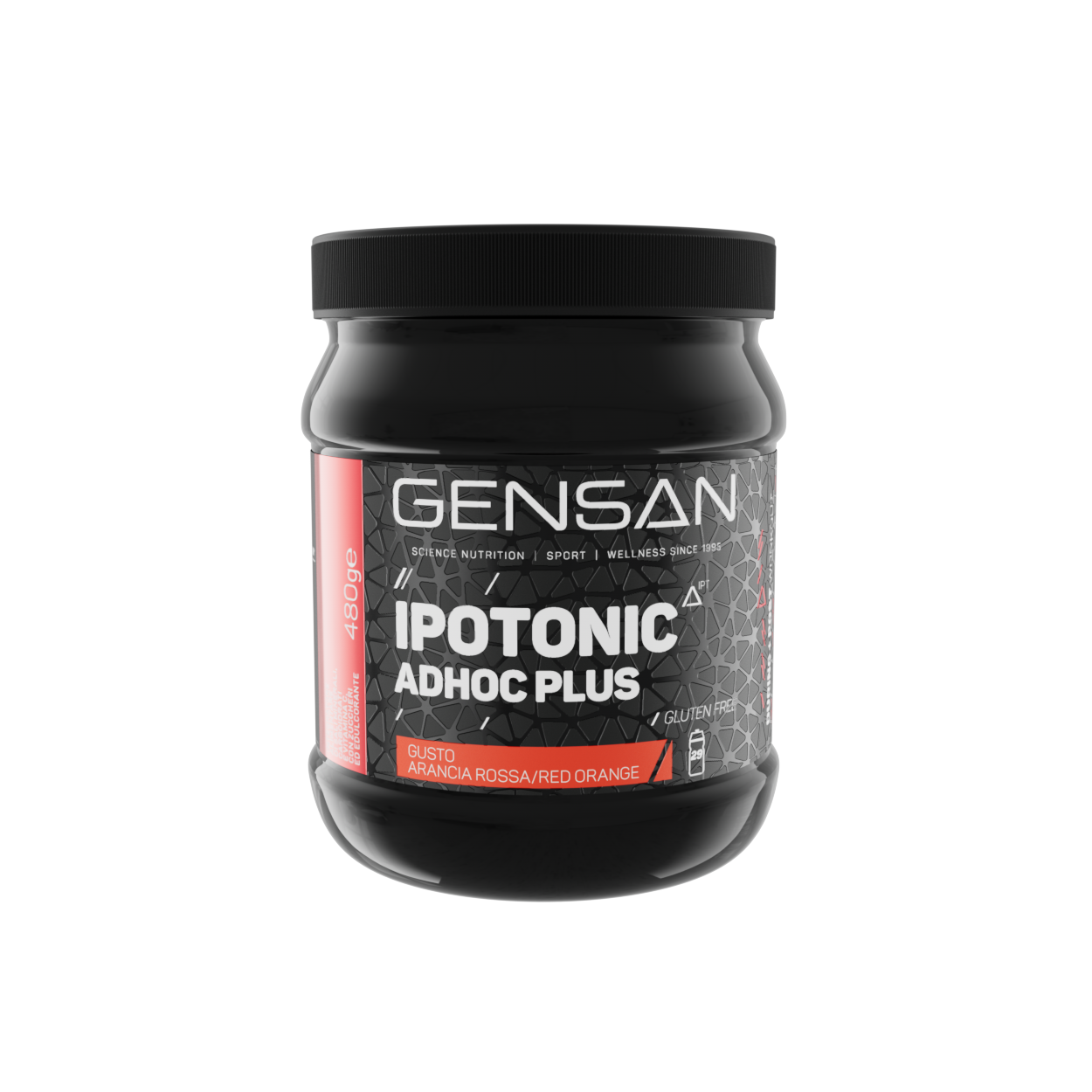
IPOTONIC ADHOC PLUS
Tax included. Shipping calculated at checkout
Hypotonic drink for athletes that replenishes lost salts
Not just a simple mineral salt drink. IPOTONIC ADHOC Plus is the best supplement for those who sweat a lot. Our hypotonic drink helps to replenish water and salt losses during sports and maintain endurance performance throughout physical activity.
Expiry Date 31/05/2028
15%
INSTANT DISCOUNT AND UNMISSABLE OFFERS
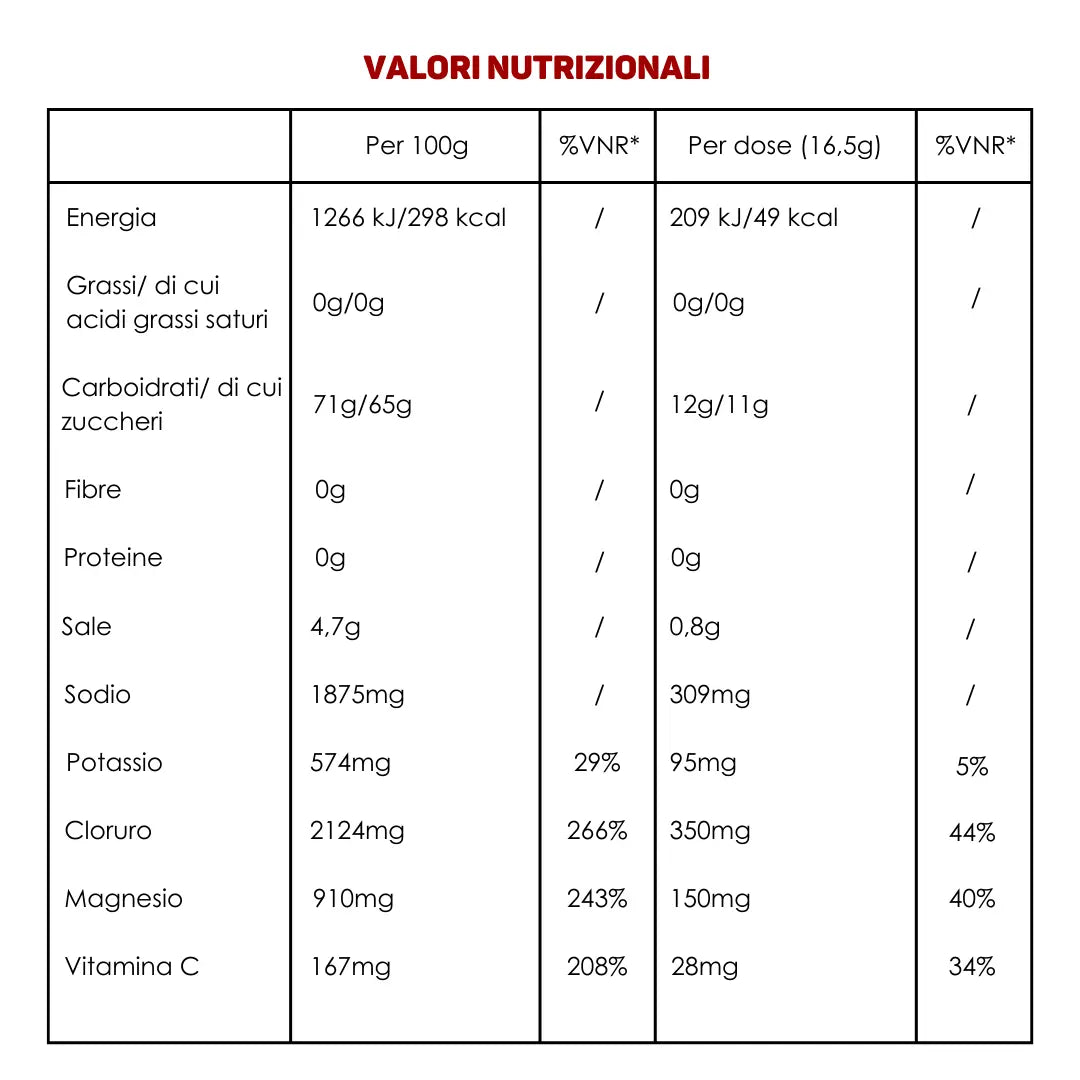
Sign up nowNUTRITIONAL INFORMATION AND INGREDIENTS
HOW TO USE
BIBLIOGRAPHY
WARNINGS
FREQUENTLY ASKED QUESTIONS
What is the difference between hypotonic, isotonic, and hypertonic drinks?
Hydro-saline drinks can be divided into hypotonic, isotonic, or hypertonic depending on the osmotic pressure generated by their concentration of electrolytes and carbohydrates. The concentration of solutes is measured in milliosmoles per liter (mOsm/l) and is called Osmolarity. Isotonic drinks have a concentration of approximately 300 mOsm/l, pass quickly through the stomach, and are rapidly absorbed in the intestine; they can be consumed in any circumstance that does not involve particular physical exertion with intense sweating. Hypertonic drinks (with osmolarity > 300 mOsm/l) are more concentrated than plasma and are absorbed slowly, unless properly diluted. The presence of many carbohydrates makes them particularly useful for restoring energy reserves rather than lost fluids. Hypotonic drinks (with osmolarity < 300 mOsm/l) are recommended during exercise, as they pass through the stomach very quickly, have strong rehydrating power, and are absorbed very rapidly in the intestine.
How can I fight cramps?
Cramps have several causes, two of which are undoubtedly connected to long periods of exercise or physical work and dehydration. We recommend carrying at least 1 liter of water supplemented with our hypotonic mineral salts to replenish lost fluids; moreover, you will not feel weighed down by the fluids because the hypotonic solution allows for rapid absorption in the intestine. We also recommend adding essential amino acids, which contribute to the normal physiological processes of human movement under intense and strenuous effort.
What are mineral salts used for?
Unlike proteins, carbohydrates, and fats, mineral salts do not provide the body with energy but keep it healthy. They are divided into two categories: macroelements and microelements (trace elements); the former includes Calcium, Phosphorus, Magnesium, Sodium, Potassium, Chlorine, and Sulfur. In the trace elements, we find: Iron, Copper, Zinc, Fluorine, Iodine, Selenium, Chromium, Cobalt, Manganese, Molybdenum, Silicon, Nickel, Cadmium, and Vanadium.